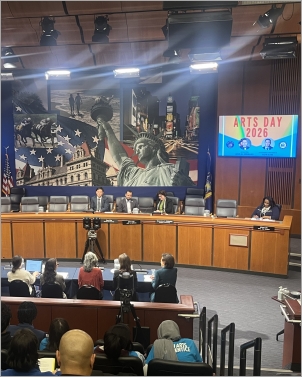
Testimony of Rachel Neches
Senior Data & Policy Researcher, Center for an Urban Future
Before the New York State Senate and Assembly for Arts Day
on Arts as an Economic Engine and Regional Impacts
February 10, 2026
Good morning. I’m Rachel Neches, Senior Data and Policy Researcher at the Center for an Urban Future, an independent, nonprofit research and policy think tank focused on building a stronger and more inclusive New York. Thank you Senator Serrano and Assemblymember Kim for the opportunity to speak today.
Now more than ever, the arts are vital to New York’s economic future.
Our research shows that the arts have been one of New York State’s most underappreciated assets in reversing decades of economic and population decline. Working artists have played a critical role at a time when many New York cities have seen little or no population growth. Over the last decade, the number of artists living upstate grew by 20 percent, while the population increased by just 1 percent. The same goes for the arts and culture sector: employment across upstate New York grew by 24 percent between 2014 and 2024, eight times faster than overall employment growth. From Western New York to the Capital Region, this is happening in all corners of the state.
In communities across the state, the arts have helped bring life back to downtowns, strengthen neighborhoods, attract and retain young people, and support both new and existing businesses.
But artists and arts organizations are facing mounting challenges. Wages for workers in the arts and culture sector have failed to keep pace with rising costs in every county. Here in the Capital Region, the average wage for the arts and culture sector is $43,000 a year, half the average wage of the region. The disparities are particularly steep for artists and cultural workers of color.
At the same time, artists and arts organizations have achieved these outcomes with limited public support. The legislature and governor have taken important steps in recent years to strengthen the New York State Council on the Arts (NYSCA), including boosting operational grantmaking capacity and allocating critical capital funding for facilities and infrastructure. These investments have made a meaningful difference.
However, NYSCA’s FY 26 grantmaking budget, which provides operating grants that are so crucial for the survival of small and mid-sized arts organizations, remains 37 percent below its peak 1990 level, adjusted for inflation. Meanwhile, funding from the National Endowment for the Arts to New York has declined over the past two decades and now faces the threat of elimination.
More broadly, New York’s direct investment in the arts remains small compared to other economic development tools, which too often overlook the arts and culture sector entirely. Encouragingly, this has begun to shift: statewide, arts and culture projects received 10.9 percent of Round 15 REDC funding. But the state can do more to fully integrate arts and culture into its broader economic development strategy.
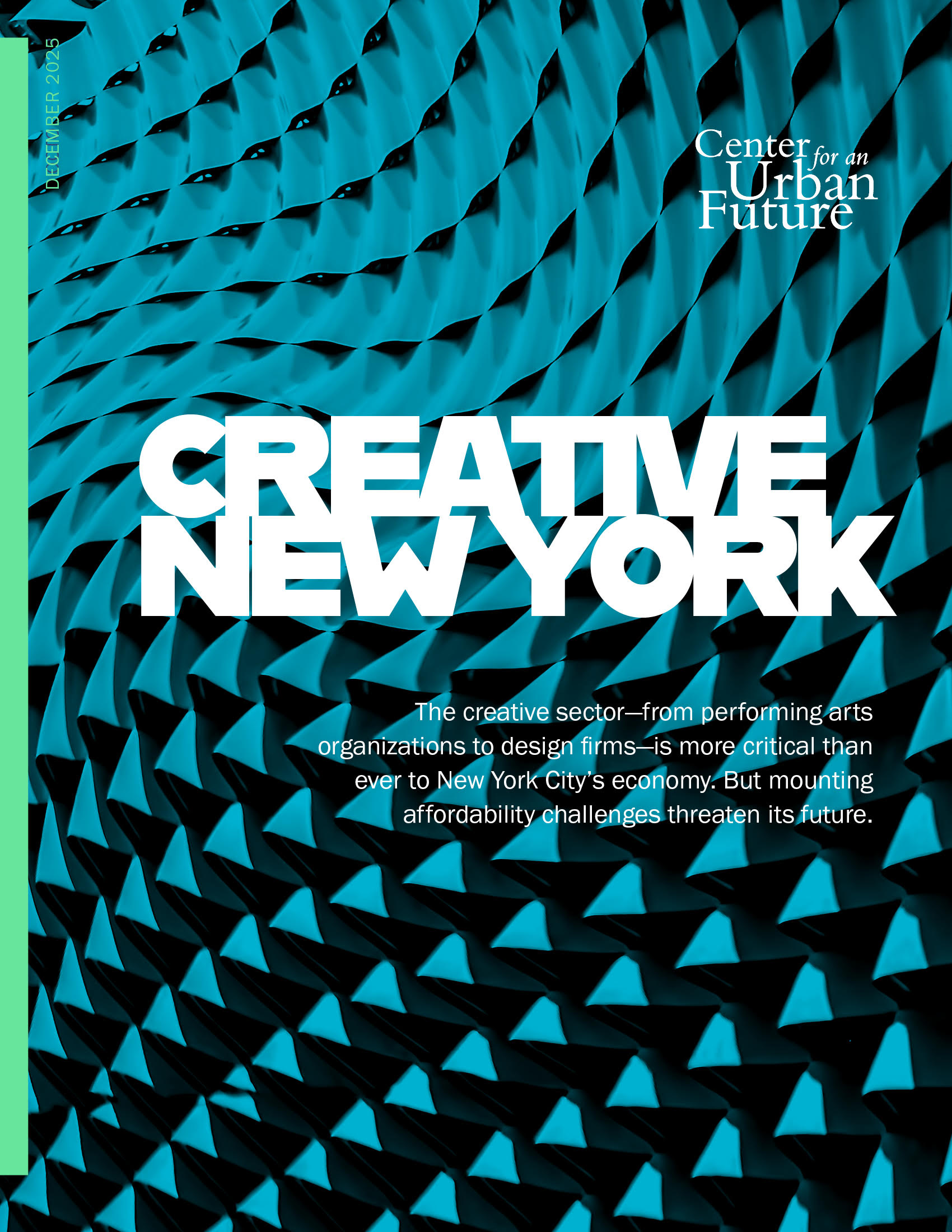
There are also warning signs ahead. Last month, we released a report, Creative New York, detailing growing challenges in New York City’s creative sector; challenges that could spread statewide if action is not taken.
Pandemic recovery is beginning to stall. Expenses are rising far faster than revenues, creating a growing affordability crisis for arts organizations. Data in our report from shared administrative services organization ArtsPool shows that between 2019 and 2024, median revenues among member organizations increased just 2.2 percent, while median operating expenses rose by 64 percent. Since the start of the pandemic, New York City has lost 4.4 percent of its resident artists—including an 18.8 percent decline in dancers—and seen declines in creative occupations such as fashion design, which fell by 25.9 percent. What we are seeing in New York City today could become the reality for the rest of the state tomorrow.
The good news is there is a lot the state can do. Governor Hochul’s proposed NY SPACE program would provide nonprofit performing arts organizations at risk of displacement funding to acquire their own venues—a key recommendation of our Creative New York report—complementing the Create in Place initiative at New York City’s Department of Cultural Affairs. Continued investment in NYSCA has also helped strengthen the sector during the precarious post-pandemic period.
But addressing these challenges will require doubling down on state investment in the arts and going beyond NYSCA alone. To start, the legislature should work toward restoring NYSCA’s budget for operating grants to its 1990 level, adjusted for inflation—at least $133 in today’s dollars—and continue to invest at least $100 million annually in capital grants.
To better integrate the arts across the rest of government, the state should seize opportunities to embed artists more directly in public life. This means continuing the pioneering work begun two years ago to create civil artist positions within state agencies and launching new initiatives to embed artists in community-based organizations, local economic development entities, and city and county governments—strengthen trust between residents and government, making civic spaces more welcoming, and bringing creative approaches to complex public challenges.
In addition, the legislature should address the growing financial precarity of the state’s freelance workforce. A large and growing share of the state’s artists and creative workers lack access to basic economic protections. Piloting portable benefits for freelance workers could help stabilize careers, reduce inequities, and improve retention of creative talent across the state.
Finally, as affordability pressures continue to push artists out of the communities they help sustain, the state should commit to expanding artist housing opportunities across New York, ensuring artists continue to live and work in the places they help make vibrant.
Thank you for the opportunity to testify. We look forward to working with the legislature to ensure New York remains a place with artists and cultural organizations can afford to thrive.
Read the full Creative New York report for a deeper look at the affordability challenges in the arts and culture sector and to take a look at our ten policy recommendations.
Check out our report Integrating Artists into NYC's Affordable Housing Strategy to learn about the key challenges to building artist housing and six ideas for how the city can do so in the future.
The report, Creative New York, was made possible thanks to the Rockefeller Brothers Fund, Howard Gilman Foundation, Ford Foundation, and Mellon Foundation. We are also grateful for general support from The Clark Foundation and the Altman Foundation, support from Fisher Brothers Foundation for CUF's Middle Class Jobs Project, and ongoing support from a number of other philanthropic funders.